In 2009 for North America and 2013 for Australasia, a significant shift occurred as analog officially ended and HD officially began. This transition from the old SD system or the old analog system was not without its challenges, but it was a necessary step forward that had been in the works for several years.
Today, most modern media is in 4K and is already making strides towards 8K. Streaming services like Netflix,Disney, and YouTube are offering 4K options, but the future is even more exciting. To put it into perspective, 8K resolution boasts sixteen times more pixels than HD TV and four times more than 4K. This not only offers more depth and detail to the film or images but also presents a new level of scrutiny. As 8K becomes the new standard, it will bring everything into sharper focus, including any imperfections. The introduction of DSLR cameras and other technologies will only amplify this effect.
This transition may seem daunting for those of us who work as crew members in makeup/SPFX, costume, lighting, or set decoration. However, it’s important to remember that we’ve navigated similar changes before. Let’s revisit the basics of makeup and SPFX and understand that many of these principles can be applied across various roles. This adaptability is a testament to our skills and experience.
The Basics
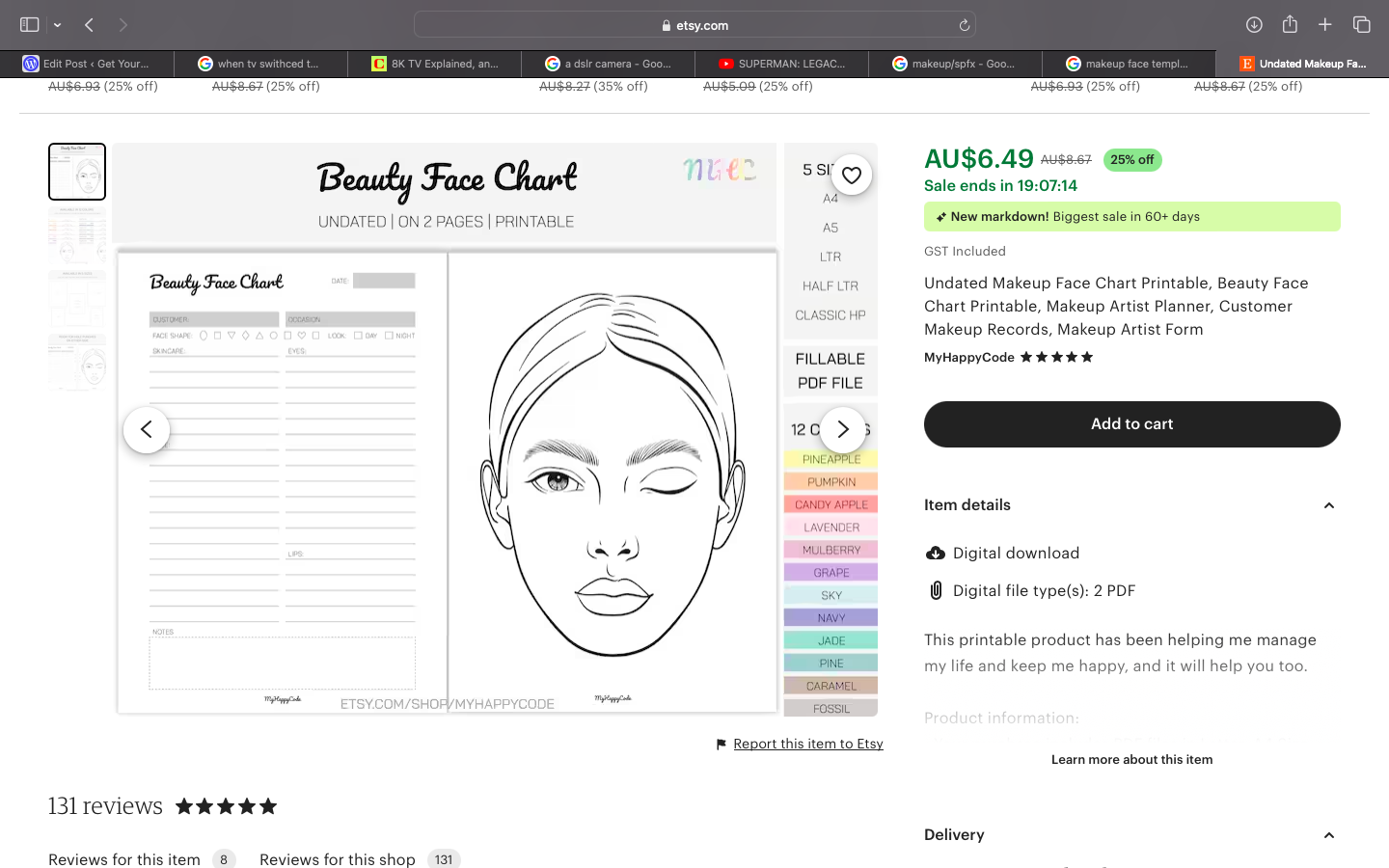
uring the last transition, what we found worked was getting the basics right first. That means reviewing what products will work well, reviewing application techniques, using a beauty face chart, and putting together a new portfolio and ideas book of your own (it could be on USB or printed out).
The example below of a face chart is available on Etsy.
One Evening A Week
It only takes about one to two hours a week to organize your ideas. Once you’ve done this, your system should work for you for about twelve months. For instance, if you’re organizing beauty and personal care products, such as mascara, false eyelashes, and eye makeup remover, you can create a products book. This can be a hard folder where you write down your ideas or a printable template in an A4 folder.
Personally, I found it most enjoyable to spend that time organizing while catching up on my favourite weekly TV shows, usually on a Thursday evening. This way, it didn’t feel like work, but rather a productive use of my leisure time. I could sort out my thoughts, my work, and jot down my ideas for the week, all while being entertained. It’s a flexible process that doesn’t take long, and the results are there for reference whenever you need them. It’s a true time-saver and a valuable tool in your working arsenal.
Know Your Products
Go over the basics in your kit. Products for dry, oily, and sensitive, what works and what won’t moving forward. My thoughts on ELF products is they are terrible, the pigment and stability are not there for what is required to look professional or good in images. MAC has changed a lot of its formula, too, as they were bought out by another company in the past few years. The pigment pots have suffered, but some good stuff is still in their range.
Having a day a few times a year to go to stores and try out samples is a good idea to keep your finger on the pulse.
When applying makeup, it’s important to watch for certain issues. For instance, caking of products can lead to a heavy, unnatural look, while clumping and settling around dry areas of the face, such as around the nose, can accentuate these areas and make the skin look patchy. On the other hand, a product that is too dry can be difficult to blend and may not adhere well to the skin, while a product that is overly shiny can make the skin look greasy and cause the product to slide off or disappear into primers and moisturizers.
Understanding the intricacies of color saturation is crucial, especially due to the way darker colors can appear even darker and ‘bleed’ out. This is particularly evident with red, which has posed challenges during each transition.
Looking At The Positive
Thanks to the internet, we have a wealth of resources at our fingertips. Remember, the social media glam look is not the standard for our industry. There are valuable behind-the-scenes videos on YouTube that can empower us with knowledge and skills to handle this issue.
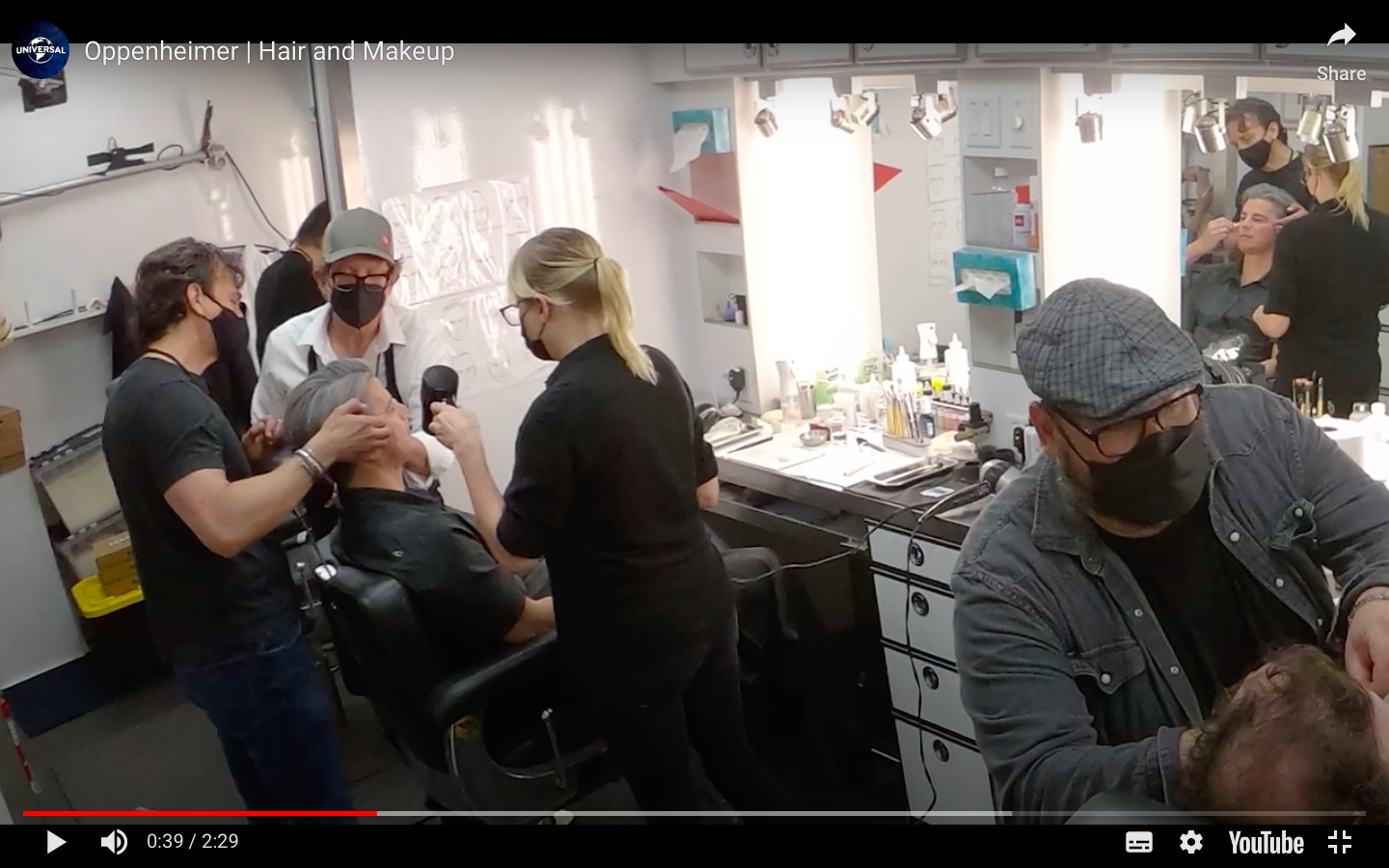
My in-depth study of the hair and makeup for Oppenheimer revealed a thoughtful use of hair pieces, wigs, prosthetics, and makeup. The application of makeup was a blend of art and science, using airbrushes and brushes with palettes of pigment. The team’s understanding that the product used in airbrushing is as important as the application itself was evident. This attention to detail and commitment to authenticity will serve us well as we transition to 8K. It’s worth noting that the application was true to life, achieving a natural look that added to the film’s overall realism.
The screenshot below showcases some of the products the team used. I want to extend a heartfelt thank you to Universal Studios for generously sharing this behind-the-scenes glimpse of Oppenheimer. Your contribution not only strengthens our Arts Community but also enriches our understanding of the craft. A special shout out to the team for their exceptional work on the film.
 Get Your Gorgeous On